Why High-Converting Landing Pages Are Driving More Sales and Leads
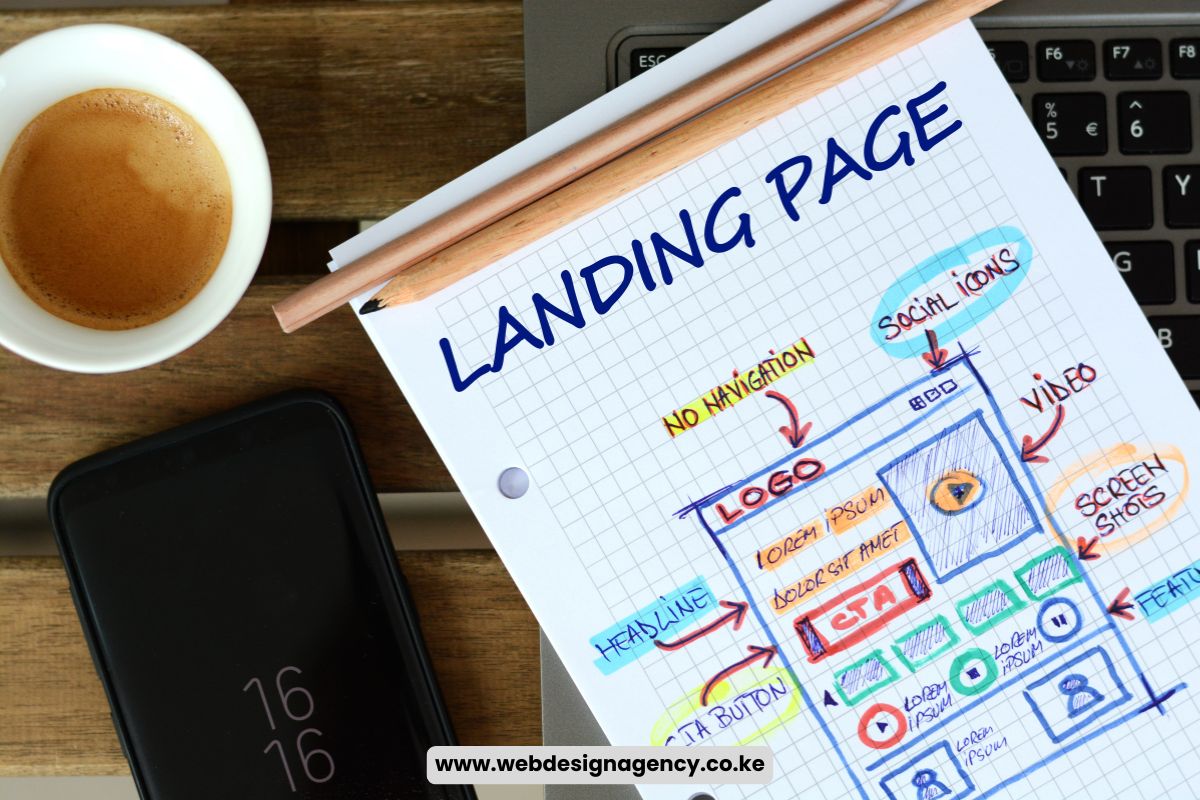
High-converting landing pages are highly focused digital entry points designed with a single conversion objective. Unlike traditional websites that serve multiple purposes and navigation paths, landing pages remove complexity and guide users through a controlled decision-making journey. Every element—headline, copy, visuals, trust signals, and call-to-action—is intentionally aligned toward one outcome: conversion.
These pages are typically used in SEO campaigns, Google Ads, social media campaigns, email funnels, and product launches where intent-driven traffic must be converted efficiently.
Core characteristics of high-converting landing pages
- Built around one clear conversion goal (lead, sale, booking, signup)
- Designed for intent-matched traffic sources
- Minimal navigation to reduce distraction and drop-off
- Conversion-focused content hierarchy
- Strategic psychological triggers for decision-making
Why high-converting landing pages matter in modern digital marketing
High-converting landing pages act as the “final conversion layer” in a marketing system. Even the best traffic sources underperform without them because users require clarity, trust, and structured persuasion before taking action.
Why High-Converting Landing Pages Are Driving More Sales and Leads
1. They align precisely with user intent and search behavior
Modern users arrive online with highly specific expectations. Whether from Google searches or paid ads, they expect immediate relevance. Landing pages are designed to eliminate ambiguity by matching message, offer, and intent in a tightly aligned structure.
How intent alignment is achieved
- Keyword-specific messaging based on search queries
- Ad-message continuity (eliminating message mismatch)
- Industry- or service-specific landing experiences
- Problem-to-solution framing within seconds
Business impact
When users feel that a page directly understands their need, hesitation decreases significantly, resulting in higher engagement rates and stronger conversion probability.
2. They eliminate cognitive overload and decision friction
Traditional websites often overwhelm users with multiple options, navigation paths, and competing messages. High-converting landing pages remove this friction entirely.
What is strategically removed
- Multi-layer navigation menus
- Competing service pathways
- Unnecessary informational content
- Distracting external links
- Secondary conversion goals
Behavioral impact
Users are psychologically guided toward a single action, reducing decision fatigue and increasing conversion consistency.
Business impact
This focused structure significantly improves inquiry rates, booking rates, and sales conversions from the same traffic volume.
3. They significantly improve advertising and SEO campaign ROI
Landing pages are the primary conversion destination for performance marketing campaigns. Their structure directly influences cost efficiency and return on investment.
Performance optimization advantages
- Higher Google Ads Quality Score due to relevance
- Lower cost-per-click through improved landing relevance
- Better SEO landing page ranking alignment
- Increased conversion rate from paid traffic
Business impact
Businesses generate more leads without increasing advertising spend, improving overall marketing efficiency and profitability.
4. They guide users through structured psychological conversion flows
High-converting landing pages are built on behavioral psychology principles that influence decision-making.
Conversion flow structure
- Attention capture through headline clarity
- Problem identification to create relevance
- Solution positioning for emotional alignment
- Benefit reinforcement for logical validation
- Trust reinforcement through proof elements
- Final action trigger through CTA placement
Behavioral impact
This structured flow mirrors how users naturally make decisions, reducing resistance and increasing action likelihood.
5. They build trust rapidly within seconds of engagement
Trust is a critical factor in online conversions, especially in service-based industries where users cannot physically verify credibility.
Trust-building mechanisms
- Testimonials and client feedback loops
- Case studies and measurable outcomes
- Professional design consistency
- Clear value propositions and transparency
- Brand authority signals
Business impact
Stronger trust reduces hesitation, increases engagement depth, and improves conversion rates across all traffic sources.
6. They enable highly targeted campaign segmentation
Landing pages allow businesses to tailor messaging for different audience segments, campaigns, and service categories.
Targeting capabilities
- Industry-specific landing pages
- Location-based targeting pages
- Campaign-specific promotional pages
- Service-specific conversion funnels
- Audience behavior-based segmentation
Business impact
Targeted messaging increases relevance, which directly improves conversion efficiency and reduces wasted traffic.
7. They provide measurable performance data for continuous optimization
Unlike general website pages, landing pages are built for testing, tracking, and optimization.
Key measurable metrics
- Conversion rate per campaign
- Bounce rate and engagement behavior
- Click-through rates on CTAs
- Heatmap interaction patterns
- Traffic source performance comparison
Business impact
Businesses can continuously refine messaging, design, and targeting to improve performance over time.
What Makes a Landing Page Truly High-Converting?
1. Strategic headline engineering
The headline must immediately communicate relevance, value, and outcome without ambiguity.
2. Conversion-focused copy architecture
Every section must progressively guide users toward decision-making rather than general information consumption.
3. Optimized performance and speed
Fast loading ensures users remain engaged long enough to complete conversion actions.
4. Strong trust infrastructure
Proof elements must be integrated throughout the page rather than placed in isolated sections.
5. Single-focused call-to-action system
One primary action must dominate the entire page structure to avoid decision dilution.
Common Reasons Landing Pages Fail to Convert
1. Lack of message clarity
When users cannot immediately understand value, they exit quickly.
2. Multiple competing objectives
Trying to sell too many things on one page reduces conversion focus.
3. Weak psychological structure
Without strategic flow, users do not progress naturally toward action.
4. Poor mobile optimization
Most traffic is mobile-driven, and poor mobile UX directly reduces conversions.
5. Slow loading performance
Even high-quality landing pages fail if users abandon before content loads.
Why Businesses in Kenya Are Prioritizing High-Converting Landing Pages
Businesses are increasingly shifting toward performance-based marketing strategies where every click must produce measurable returns. High-converting landing pages are now central to SEO campaigns, paid advertising, social media funnels, and lead generation systems because they maximize the value of existing traffic without increasing acquisition costs.
This shift reflects a broader evolution in digital marketing—from visibility-focused strategies to conversion-focused systems designed for measurable business growth.
Get High-Converting Landing Pages That Drive Real Business Results
Build powerful high-converting landing pages with Web Design Agency Kenya and transform your traffic into consistent leads and sales. We design conversion-focused landing pages engineered for SEO, paid advertising, and campaign performance—helping businesses increase inquiries, boost conversions, and maximize ROI through strategic UX design, persuasive messaging frameworks, and data-driven optimization systems built for scalable growth.